
June 22, 2026
What to Document After Property Damage (Before You File a Claim)
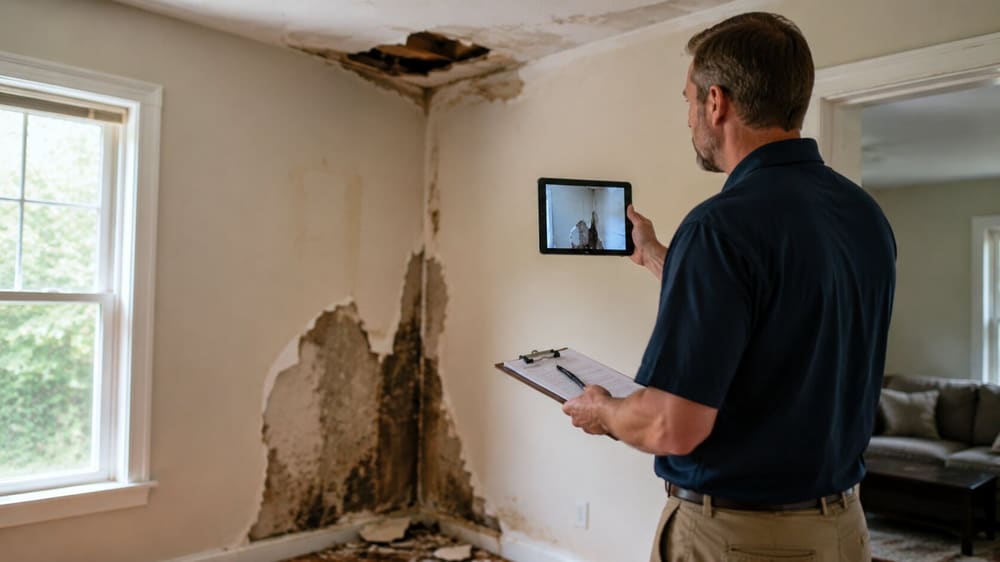
When property damage happens, the instinct is to clean up and move on as fast as possible. But the quality of your eventual insurance settlement is often decided in the first 48 hours — by what you document before anything is repaired, thrown away, or dried out. As a Xactimate Level 2 Certified estimating firm, we see the same pattern again and again: the claims that go smoothly are the ones that were documented well from the start.
Here is what we tell homeowners and contractors to capture.
1. Photograph everything, from wide to close
Take far more photos than you think you need. For each damaged area, capture three distances: a wide shot that shows the whole room or elevation, a medium shot that shows the damaged feature in context, and a close-up that shows the detail. Photograph the source of the loss (the failed pipe, the storm-damaged roof section) as well as the resulting damage.
Date-stamped photos are ideal. If your phone embeds the date and location automatically, leave that setting on.
2. Capture damage before mitigation changes it
Water dries. Soot gets cleaned. Debris gets hauled away. Once mitigation begins, the original condition is gone — and so is your ability to prove its extent. Photograph standing water lines, saturated materials, and the full footprint of the damage before any drying or demolition starts. If emergency mitigation must happen immediately, document as you go.
3. Keep a written timeline
Write down when the loss happened, when you discovered it, who you called, and what was done. Note any emergency services — a plumber, a board-up crew, a water-extraction company — and keep their invoices. A clear timeline supports causation, which is often the first thing a carrier evaluates.
4. Save receipts and damaged items
Hold onto receipts for emergency repairs, temporary housing, and replacement of urgent necessities. Where it is safe to do so, keep damaged materials and contents until they have been documented — a photo of a discarded item is weaker evidence than the item itself.
Where a certified estimator fits in
Thorough documentation gives you the raw material; a detailed, well-supported estimate turns it into a number the carrier can act on. We write clean, line-item Xactimate estimates from documented scope, prepare supplements when the original estimate misses scope, and help homeowners and contractors understand the process — without taking over your project.
If you have a loss and are not sure what to capture or what your estimate should include, call us at 513-692-9880 or send a message. A few minutes early in the process can protect the whole claim.
Have a question about your estimate or claim?
513-444-8505